
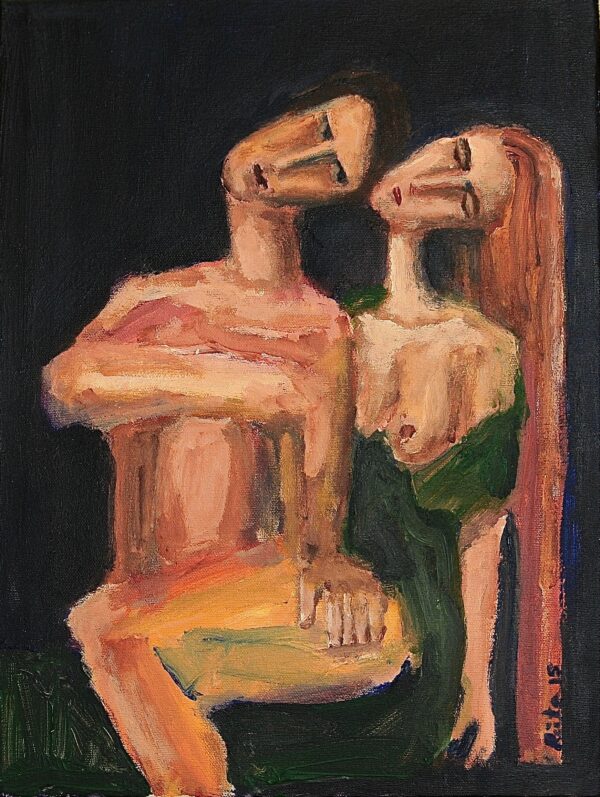
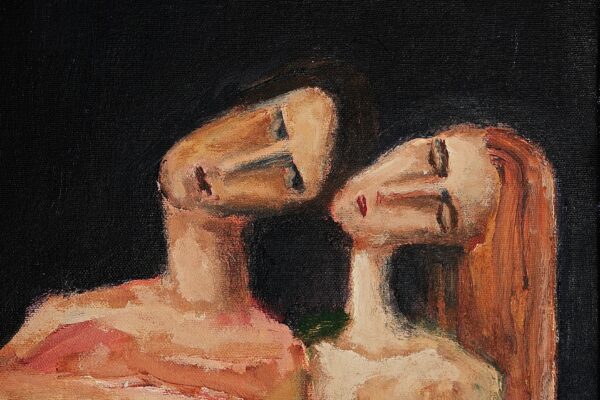
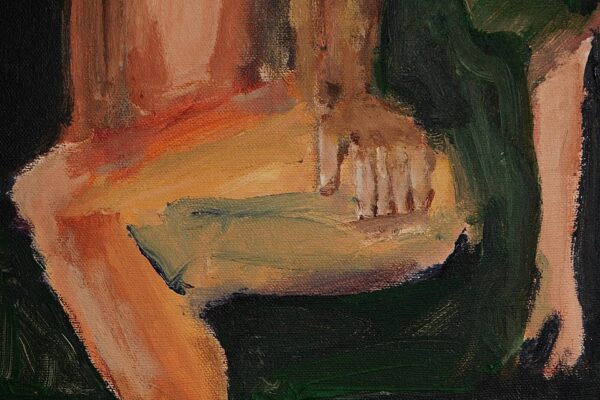
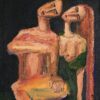

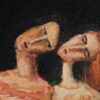
In Possession, two entwined figures lean into one another. Their elongated forms pressed closely together in a gesture of intimacy and surrender. The male figure, partially unclothed, rests in a posture of quiet strength, while the female figure leans against him. Her long hair flowing down her shoulder like a flame. Their tilted heads, almost mirroring each other, create a rhythm of closeness that feels both tender and charged with intensity.
The bold brushstrokes and textured layers of paint heighten the physicality of the scene, as though the figures are sculpted directly onto the canvas. Deep tones of green and flesh merge against a dark background, emphasizing the sensual presence of the bodies and the psychological weight of their embrace. The figures are not simply posed; they are bound together, their connection portrayed as something deeper than affection—a claiming, a belonging, a mutual surrender of self.
The title, Possession, invites multiple readings. On one level, it reflects the passion and closeness between two people who dissolve the boundaries between themselves. Yet it also raises questions: where does intimacy end and ownership begin? Is possession here an act of love, of devotion, or of dominance? The tension between comfort and control is left unresolved, allowing the viewer to bring their own interpretation to the work.
At its heart, this painting is a meditation on desire, closeness, and the vulnerability of giving oneself to another. The figures’ stillness suggests not only passion but also trust, a willingness to exist within the other’s presence. In its raw brushwork and stylized forms, Possession captures the timeless human struggle between love and longing, between autonomy and connection. It is a painting that speaks to the fragile beauty of intimacy, and the power it holds over us.