

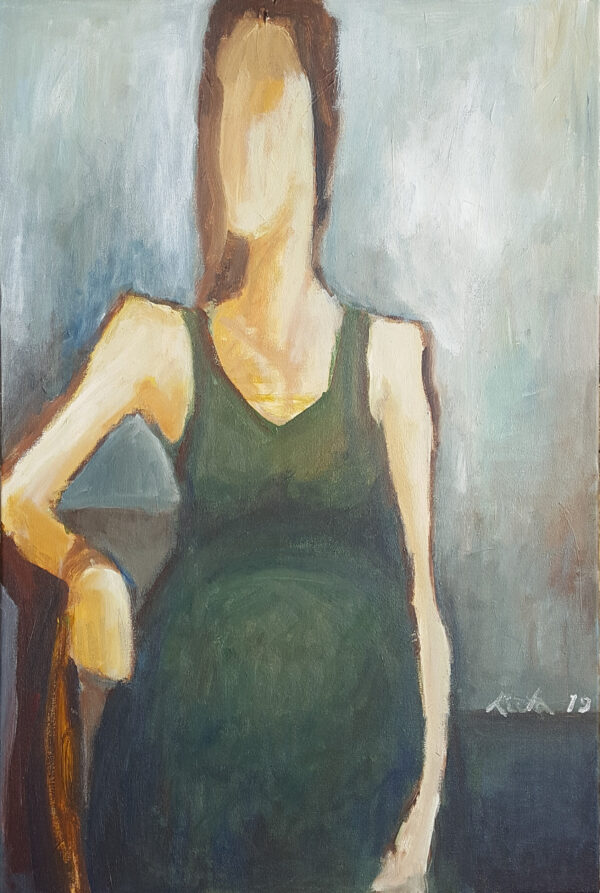
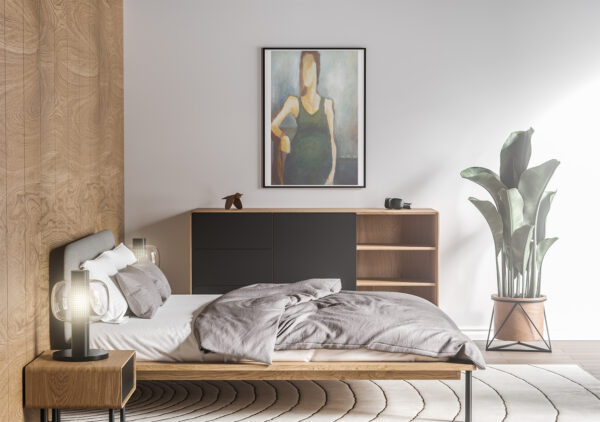
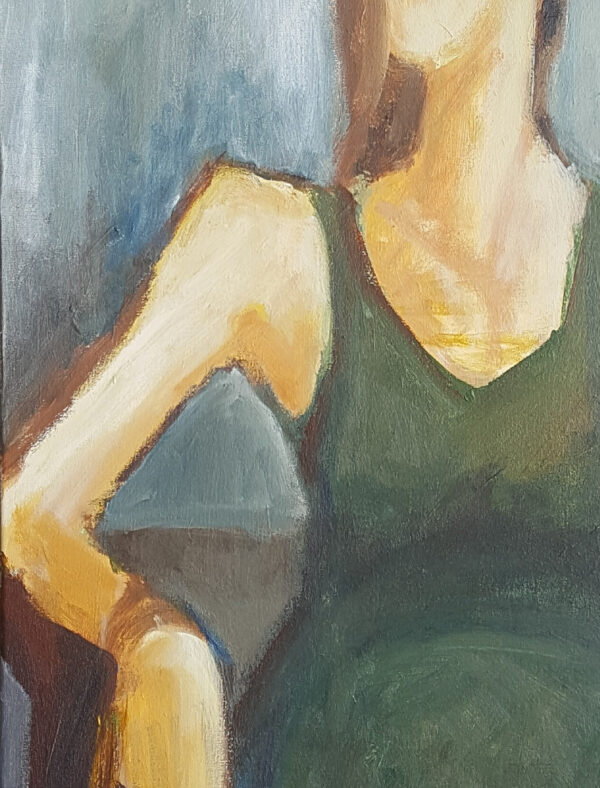
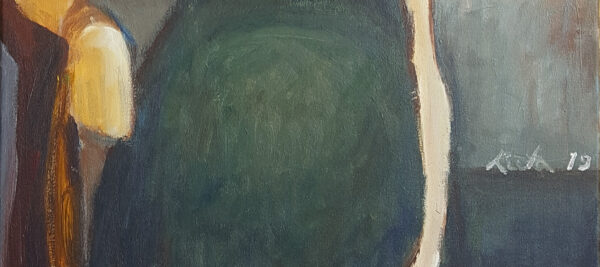
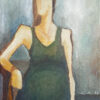

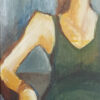
In Woman in Green Dress, the figure of a pregnant woman is portrayed with quiet dignity, her rounded form emerging softly from the canvas. The body is fully present—solid, grounded, and luminous in its expectancy—while the face remains deliberately unpainted. This absence shifts attention away from individual identity. It allows the viewer to see her not as one woman, but as a universal symbol of life, creation, and possibility.
The flowing green dress wraps around her like a protective shell. Its bold color resonating with themes of fertility, renewal, and growth. Green, often associated with nature and balance, here becomes both a garment and a metaphor. It evokes the cycles of life, the nurturing energy of the earth, and the promise of new beginnings. Against a subdued background, the dress radiates strength, turning the maternal form into a luminous presence within the quiet stillness of the canvas.
Her facelessness invites contemplation. By omitting features, the painting resists being tied to a single identity and instead speaks to the shared, timeless experience of motherhood. It emphasizes the body as a vessel—both fragile and powerful—carrying the weight of creation. This absence also heightens the emotional resonance of the work. But leaves space for the viewer to project their own associations, memories, or feelings.
Woman in Green Dress is not only a portrait of pregnancy but also a meditation on becoming. It is a transition, vulnerability, and the profound strength of waiting. The stillness of her posture conveys a calm endurance, while the glowing color of her dress transforms her into a figure of hope and continuity. In its restraint, the painting reveals the quiet, universal poetry of motherhood.