

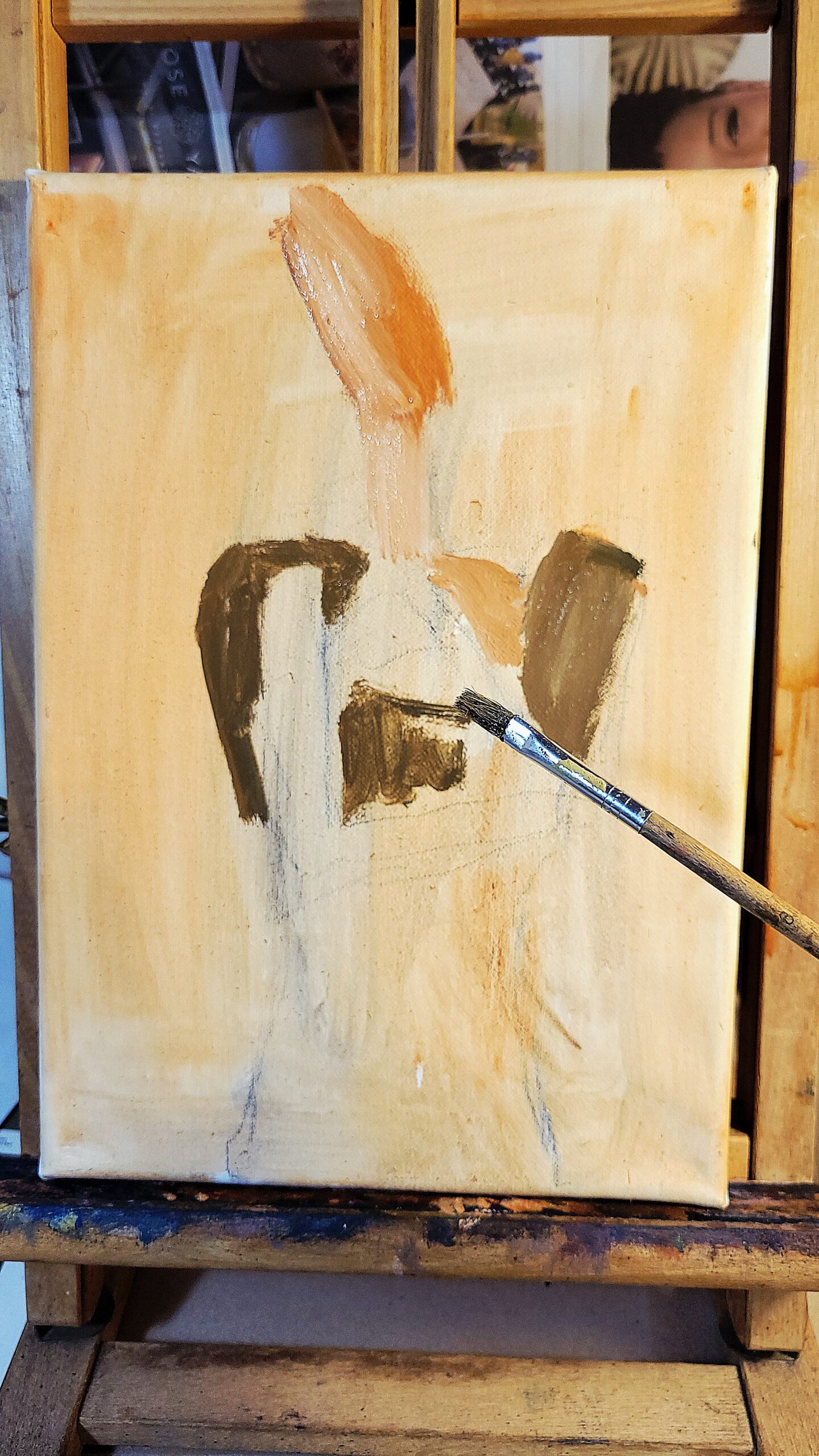
As a figurative artist, my creative process is guided more by emotion than by structure. I begin with very little sketching — sometimes just a few intuitive lines or gestures. I allow the painting to unfold naturally. My work is grounded in feeling, not formula. I rely on the emotion of the moment to lead me, and that sense of immediacy shapes everything: the colours, the figures, the light, and the composition.
In my contemporary figurative paintings, I try to capture something real and unrepeatable – a fleeting connection between thought and movement. When I’m painting, I’m chasing something fleeting — an energy, a rhythm, a state of mind. If I step away for too long, that energy often changes or disappears. Returning to the work feels like stepping into a different moment entirely.
Because of this, I have many unfinished paintings and projects. They serve as traces of moments that have passed — visual notes of emotions that once felt urgent and alive. Some pieces remain incomplete simply because the feeling that inspired them is no longer relevant; others may wait months or years until a new moment reconnects with the old one.
Each painting begins with a spark — an emotion, a memory, or even a simple observation — and evolves as I respond to it. In my artist studio, I treat the canvas as a space for dialogue, not control. I don’t chase perfection or polished realism; instead, I seek honesty and immediacy. The figures often emerge gradually, shaped by intuition rather than plan, balancing abstraction and representation in a way that feels alive.
For me, painting is about being fully present. Whether the work is completed in one sitting or left suspended mid-gesture, it reflects the rhythm and vulnerability of that moment. My goal is not to capture likeness, but to express essence. To translate what it feels like to be there, between motion and stillness, colour and silence.
Each unfinished canvas is a reminder that art, like life, is always in progress.