


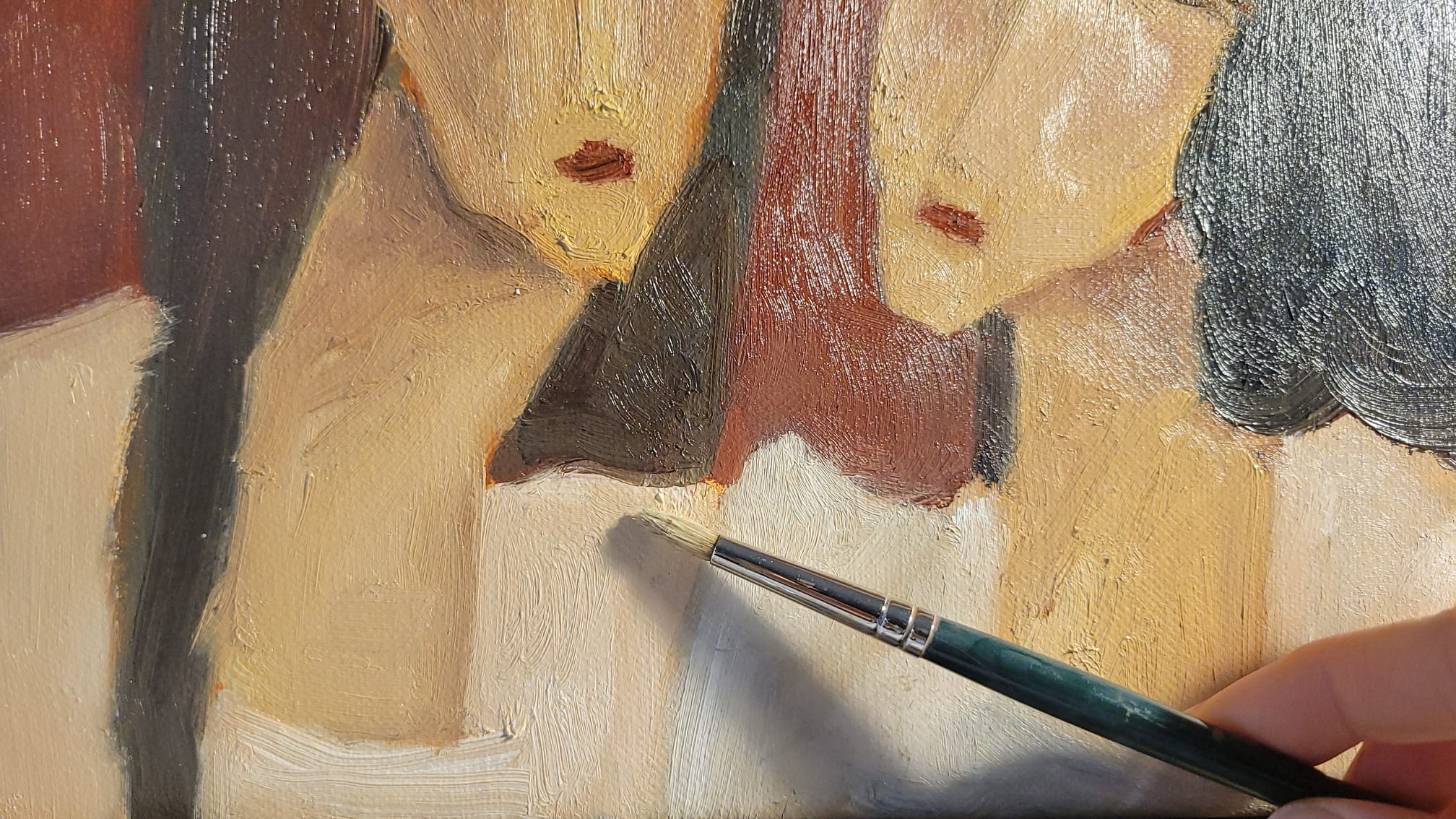
For a long time, I painted exclusively with acrylics. Like many artists, I was drawn to their practicality—quick drying time, easy cleanup, and a sense of control. Acrylics allowed me to work fast, build layers quickly, and respond intuitively to the figure without too much waiting. They became familiar, almost comfortable.
At the same time, I was quietly intimidated by oil paints.
Oils felt slow, demanding, and unpredictable. I worried about the long drying times, the technical knowledge they seemed to require, and the patience they demanded—something I wasn’t sure I had. For years, I admired oil paintings from a distance while convincing myself that acrylics were “enough.”
Working with Acrylics in Figurative Painting
Acrylics have many strengths, especially for figurative work. They dry fast, which makes them ideal for quick studies, underpaintings, and decisive gestures. This speed can be energizing, but it also leaves little room for correction. Once a layer is dry, it’s set. Blending must be done quickly, and transitions often need to be built through layering rather than subtle manipulation.
For a long time, this suited my temperament. I worked instinctively, responding to the figure with urgency. But over time, I began to feel a limitation—especially when it came to skin tones, depth, and atmosphere. I wanted more softness, more ambiguity, more time to think within the painting.
The Shift to Oil Paint
Eventually, curiosity overcame fear, and I began painting with oils.
The experience was transformative.
Oil paint moves differently. It stays open. It allows hesitation, revision, and reflection. Where acrylics often ask for decisiveness, oils invite patience. I could push paint around, soften an edge hours—or even days—later, and let forms emerge slowly instead of forcing them.
At first, this slowness was frustrating. I had to adjust my rhythm, learn to wait, and accept that a painting might take much longer to resolve. But gradually, I began to appreciate what oils were offering me: time to see.
Patience and Satisfaction
Oil painting requires patience—there is no way around that. But with that patience comes a deep sense of satisfaction. The process feels more contemplative. The figure develops organically, almost breathing its way onto the canvas. Transitions become richer, flesh tones more nuanced, and the surface more alive.
What once intimidated me now feels grounding.
With oils, I feel less rushed and more connected to the act of painting itself. The medium encourages presence. Each session becomes a dialogue rather than a race.
Acrylic vs Oil: Not Better, Just Different
I don’t see this as a story of one medium being better than the other. Acrylics taught me a great deal—about structure, confidence, and immediacy. Oils have taught me patience, sensitivity, and depth.
For my figurative work today, oil painting gives me the space I need—emotionally and visually. The slower pace aligns with how I want to explore the human figure: thoughtfully, attentively, and with room for uncertainty.
A Personal Conclusion
Moving from acrylics to oils was not just a technical change; it was a shift in mindset. What once felt intimidating has become deeply rewarding. Oil painting asks more of me—more patience, more time—but it gives back just as much, if not more.
The satisfaction I find in working with oils is quiet but profound. It reminds me that sometimes slowing down is not a limitation, but a gift.