


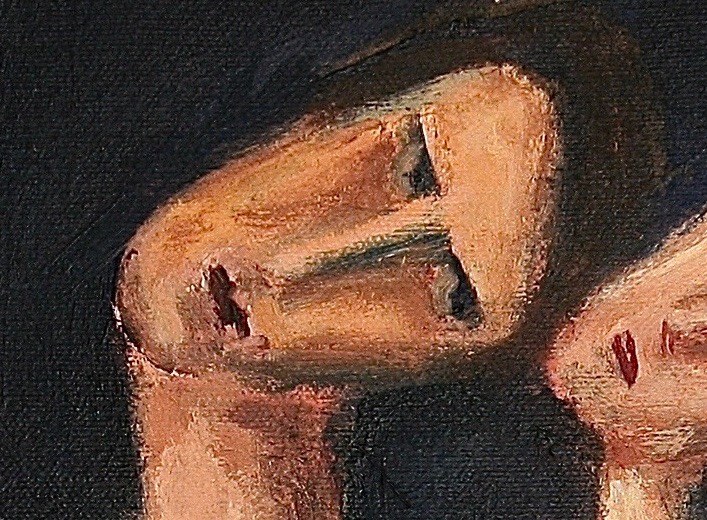
Figurative painting—art that represents the human figure—has been at the center of visual culture for as long as humans have made images. Long before abstraction, the figure was a way to understand identity, power, emotion, and the body itself. To paint the figure has always been more than an aesthetic choice; it has been a way of asking what it means to be human.
As a contemporary figurative painter, I often feel connected to this long and layered history. Each time I paint the human form, I am entering a conversation that spans thousands of years.
The Origins: Figurative Painting in Ancient Art
The earliest figurative images date back to prehistoric cave paintings, where human forms appeared alongside animals in ritualistic and symbolic contexts. These figures were often simplified, but they already carried meaning—gesture, movement, and narrative were present from the very beginning.
In ancient civilizations such as Egypt, Greece, and Rome, figurative art became more formalized. Egyptian figures followed strict rules of proportion and symbolism, reflecting social order and spiritual beliefs. Greek artists, by contrast, pursued idealized beauty and anatomical precision, studying the human body to express balance, harmony, and perfection.
An interesting fact: many classical Greek sculptures we now see as white marble were originally brightly painted, reminding us that figurative art has always been more expressive and complex than it may appear today.
The Renaissance: The Human Figure at the Center
The Renaissance marked a turning point in the history of figurative painting. Artists such as Leonardo da Vinci, Michelangelo, and Raphael combined anatomical study with emotional depth, perspective, and realism. The human figure became the primary subject through which artists explored science, philosophy, and spirituality.
During this period, drawing from life and studying anatomy were considered essential skills. The figure was not only something to depict, but something to understand. This emphasis on observation and structure still forms the foundation of figurative painting today.
Baroque to Romanticism: Emotion and Movement
In the Baroque era, figurative painting became more dramatic and theatrical. Artists like Caravaggio and Rembrandtused strong contrasts of light and shadow to heighten emotion and focus attention on the human form. Gesture, expression, and psychological intensity took center stage.
Later, during Romanticism, artists embraced individuality and emotional experience. The figure became a vehicle for storytelling, personal expression, and political commentary. Rather than idealized bodies, artists often portrayed vulnerability, struggle, and passion.
Modernism: Challenging the Figure
The rise of Modernism in the late 19th and early 20th centuries radically changed figurative painting. Artists such as Picasso, Matisse, and Egon Schiele distorted the human form to express inner realities rather than outward appearances. Proportion and realism were no longer rules, but tools to be broken.
Interestingly, even as abstraction gained prominence, the human figure never disappeared. Many abstract movements emerged in response to figurative traditions rather than in rejection of them.
Contemporary Figurative Painting: A Return and Reinvention
Today, figurative painting is experiencing a renewed presence in contemporary art. Many artists are returning to the figure as a way to explore identity, memory, gender, politics, and emotional states. The contemporary figurative painter often works between tradition and experimentation, combining classical skills with personal language.
As a figurative painter working today, I see my practice as part of this ongoing evolution. While techniques, materials, and contexts change, the impulse remains the same: to use the human figure as a way of understanding lived experience.
Why Figurative Painting Still Matters
Figurative painting endures because the human body is endlessly complex and deeply relatable. Every figure carries a story—through posture, gesture, presence, or absence. Even in an age dominated by digital images and rapid consumption, the painted figure invites slowness, attention, and empathy.
Perhaps this is why figurative painting continues to resonate: it reflects us back to ourselves.
A Living Tradition
The history of figurative painting is not a closed chapter—it is a living tradition. Each contemporary figurative painter adds another voice, another interpretation of the human form. To paint figures today is to acknowledge the past while responding to the present.
In my own work, I see figurative painting not as a historical category, but as a continuous inquiry—one that began long before me and will continue long after.